
Bill Hooks and Slashers: Which Tool for Hedging and Brush?
- 14 September 2026
- Peter Greenley
Guides › Bill Hooks & Slashers · Last updated 14 September 2026 · TreeMarker
A bill hook is a short-handled, single-handed tool for close work such as hedge laying and cutting kindling. A slasher is a long-handled, two-handed tool for clearing standing brush and scrub at arm's length. Brushing hooks are heavier long-handled tools for thicket work, and grass hooks and scythettes are lighter tools for rough grass. TreeMarker stocks Richard Carter, Spear & Jackson and Müller patterns from £23.95 ex VAT.
Which tool is which?
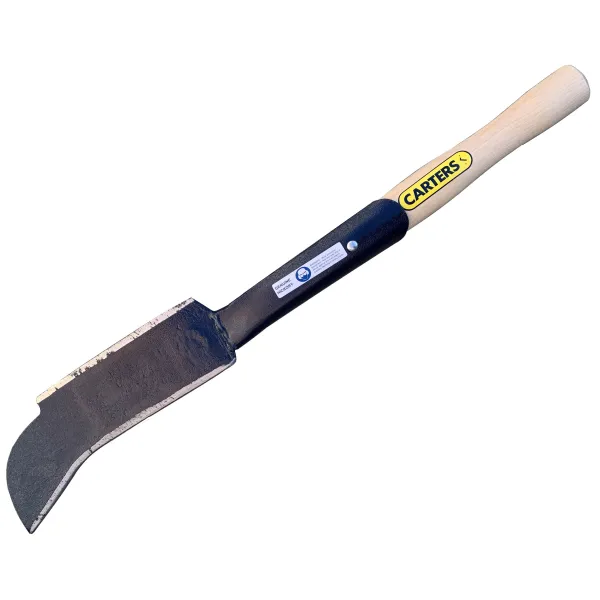
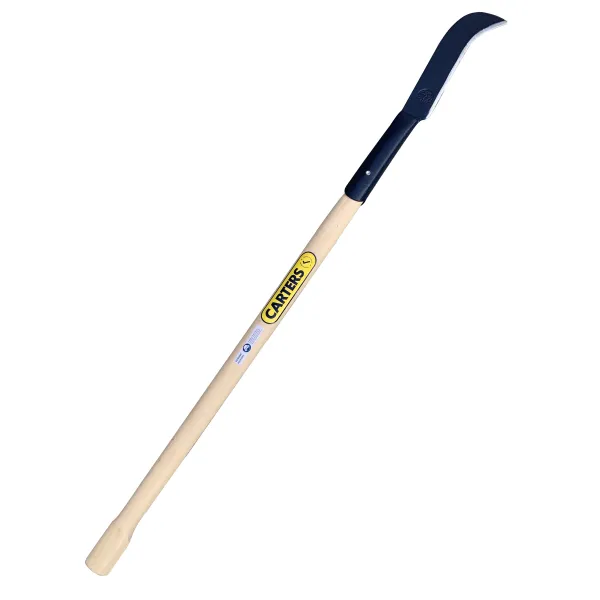
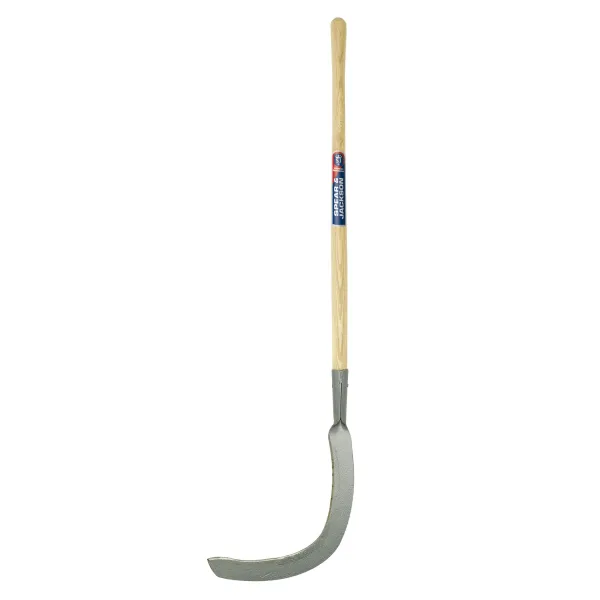
A bill hook (Richard Carter Yorkshire Bill Hook), a slasher (Richard Carter Dunse Slasher) and a brushing hook (Spear & Jackson West Country Staff Brushing Hook)
| Tool | Handle | Use | Working position |
|---|---|---|---|
| Bill hook | Short, one hand | Hedge laying, pleaching, trimming, kindling, stake pointing | Close, controlled, often kneeling or bent to the work |
| Slasher | Long, two hands | Clearing standing brush, scrub, brambles, hedge sides | Standing, swinging at arm's length |
| Brushing hook | Long, two hands, heavier head | Dense thicket, heavier woody growth | Standing, heavy swing |
| Grass hook / scythette | Long, lighter | Rough grass, weeds, light growth | Standing, sweeping cut |
The distinction that matters in practice is reach and cutting mass. A bill hook puts your hand next to the cut, which is exactly what you want when laying a hedge and placing each pleacher deliberately. A slasher keeps you a metre back from a bramble thicket, which is exactly what you want when you are clearing it.
What are the regional bill hook patterns?
Bill hook patterns carry regional names — Newtown, Yorkshire, Stafford, Southern Counties, Irish — and they are one of the last living traces of Britain's regional hedging traditions. Different counties developed different hedge styles, worked different species, and evolved blade shapes to suit.
Some practical guidance on choosing between them:
- Newtown is among the most widely used general-purpose English patterns and a sound default if you have no local tradition to follow.
- Yorkshire and Stafford patterns are associated with the northern and midland hedging styles respectively.
- Southern Counties patterns reflect the hedging traditions of southern England.
- Irish hooks and slashers, including the ring-and-bolt curved pattern, are associated with Irish hedgerow management.
Honest advice: unless you are working within a specific regional hedging tradition, choose by weight, balance and blade length rather than by pattern name. Pick the hook up, feel where it balances, and consider what you will actually cut. A heavier head does more work per stroke on thick material but tires you faster on a long day of fine work. If you are laying hedges competitively or to a county standard, then the pattern name genuinely matters and your local hedging society will tell you which one.
Single edge or double edge?
A single-edged bill hook has one sharpened edge along the curved blade. It is simpler, safer to handle, and the unsharpened back can be struck with a mallet or used to push material aside.
A double-edged bill hook adds a second, usually shorter, edge on the back of the blade. That secondary edge is used for finer cuts, trimming and splitting kindling, so one tool covers two jobs without turning it round in the hand. The trade-off is that there is no safe surface to grip, strike or rest against — you must be more deliberate about where your other hand is at all times.
For hedge laying, many workers prefer a double edge for the versatility. For general estate and brush work, a single edge is the more forgiving tool.
Hedge laying: when and how the tools are used
Hedge laying rejuvenates an overgrown hedge into a stock-proof, dense barrier. The stems, or pleachers, are partly cut through near the base and bent over at an angle while still living, then held in place with stakes and, in most styles, bound along the top with binders.
The bill hook does the critical cut. It must be an angled cut that leaves enough living sapwood and bark connected to keep the pleacher alive, while removing enough wood to let it bend without snapping. Too deep and the stem dies; too shallow and it will not lay. This is why a properly sharp hook matters — a blunt blade tears and crushes the hinge rather than cutting it cleanly.
Timing and wildlife law. Hedge laying is traditionally winter work, done while the hedge is dormant and before the nesting season. Under the Wildlife and Countryside Act 1981 it is an offence to intentionally damage or destroy the nest of a wild bird while it is in use or being built — this applies to everyone, all year round. Separately, farmers and land managers subject to the hedgerow management rules are generally prohibited from cutting or trimming hedgerows between 1 March and 31 August. Check the rules that apply to your land and scheme before starting work.
Keeping an edge
A hook or slasher is only as good as its edge, and these are tools designed to be maintained rather than replaced.
- Touch up in the field. A round or oval whetstone carried in the pocket takes seconds and keeps the edge working. Follow the existing bevel angle rather than trying to create a new one.
- Work from the base to the tip along the curve, keeping the stone at a consistent angle, and finish by removing the burr on the reverse.
- Only grind when necessary. A powered grinder removes far more steel than a hand stone and, used carelessly, will overheat the edge and draw the temper — permanently softening the steel. If you must grind, go slowly and keep the blade cool.
- Look after the handle. Wipe hardwood handles occasionally with boiled linseed oil. A dry handle raises splinters and eventually shrinks in the socket, which makes the head loose and the tool dangerous.
- Store dry and sheathed. A leather cover, such as the 25 cm Müller scabbard at £19.95 ex VAT, protects both the edge and whoever next reaches into the bag.
Using hooks and slashers safely
- Always cut away from your body, and be conscious of where the blade travels if the material gives way suddenly. Most injuries with these tools come from a stroke that met less resistance than expected.
- Keep other people well clear. Two tool-lengths is the traditional minimum for a swinging tool; more for a long-handled slasher.
- Watch your leading hand. When holding a stem with one hand and cutting with the other, keep the holding hand above the cut, never below it.
- Wear gloves and eye protection. Blackthorn and bramble cause more injuries on hedgework than the blade does.
- Do not use a blunt tool. A blunt edge needs more force, bounces off rather than biting, and is genuinely more dangerous than a sharp one.
- Sheath it the moment you stop. Never leave a hook lying loose in vegetation.
The range and prices
The range is set out by the type of tool, in the same order as the Which tool is which? table above, then by maker in the order TreeMarker stocks them: Richard Carter, Spear & Jackson and Müller. A cover or accessory sits directly under the tool it fits.
Bill hooks
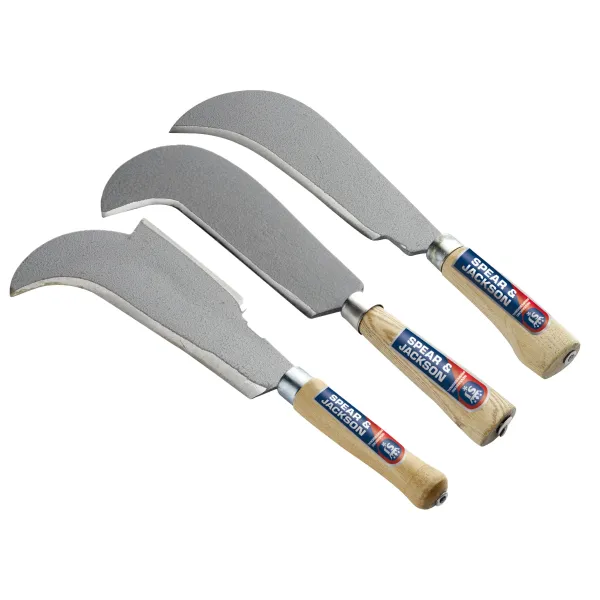
Spear & Jackson Bill Hooks: 10-inch blade in the Newtown, Southern Counties and Stafford patterns
| Product | Detail | From (ex VAT) |
|---|---|---|
| Richard Carter Newtown Bill Hooks | Single and double edge, hardwood handle | £23.95 |
| Richard Carter Yorkshire Bill Hook | Double edge, hardwood handle | £32.25 |
| Spear & Jackson John Riley Irish Hook | 15" single edge, heat-treated, hardwood handle | £25.95 |
| Spear & Jackson Bill Hooks | 10" blade; Newtown, Southern Counties and Stafford patterns | £28.95 |
| Müller Bill Hook with Leather Grip | Curved point, leather grip | £44.95 |
| Müller Bill Hook Leather Cover | 25 cm leather scabbard | £19.95 |
Slashers
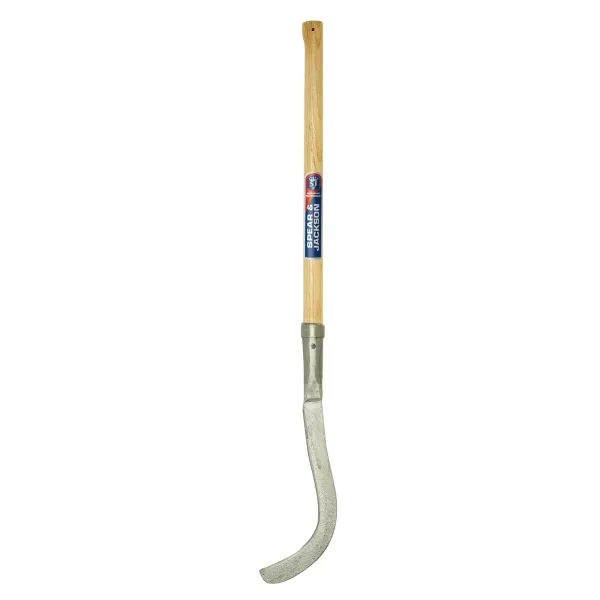
Spear & Jackson Irish Slasher: 16-inch single edge, oval hardwood handle
| Product | Detail | From (ex VAT) |
|---|---|---|
| Richard Carter Dunse Slasher | Single and double edge | £44.75 |
| Richard Carter Irish Slasher | Ring and bolt curved pattern | £46.75 |
| Spear & Jackson Heavy Duty Edge Slashers | Forged carbon steel, single or double edge, wooden handle | £44.95 |
| Spear & Jackson Irish Slasher | 16" single edge, oval hardwood handle | £47.95 |
Brushing hooks
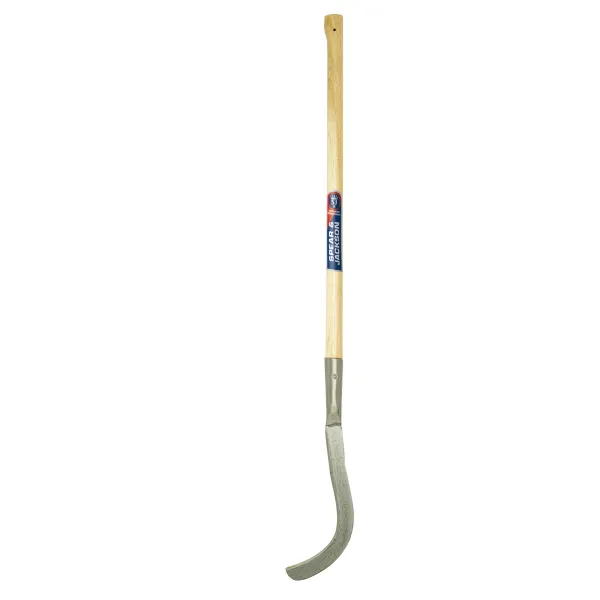
Spear & Jackson Heavy Duty Brushing Slasher: 16-inch single edge, oval hardwood handle
| Product | Detail | From (ex VAT) |
|---|---|---|
| Spear & Jackson West Country Staff Brushing Hook | 15" single edge, profiled hardwood handle | £51.45 |
| Spear & Jackson Heavy Duty Brushing Slasher | 16" single edge, oval hardwood handle | £54.95 |
Grass hooks and scythettes
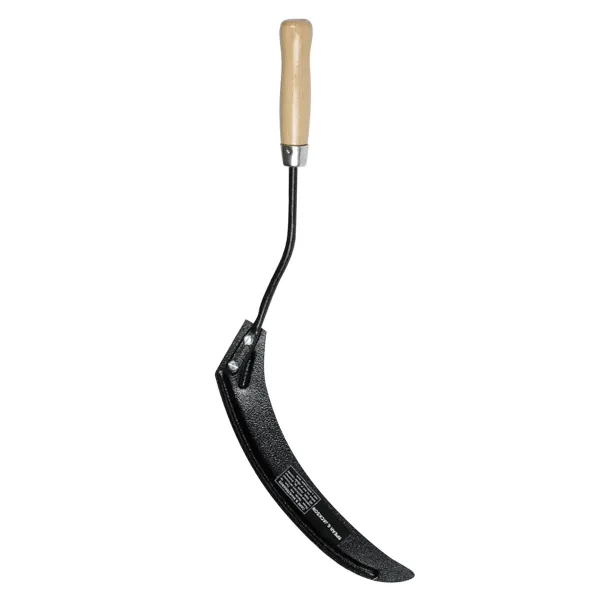
Spear & Jackson Razorsharp Little Giant Grass Hook: replaceable 305 mm blade, cranked hilt
| Product | Detail | From (ex VAT) |
|---|---|---|
| Spear & Jackson Razorsharp Little Giant Grass Hook | Replaceable 305 mm blade, cranked hilt | £27.95 |
| Spear & Jackson Razorsharp 12" Scythette | Long grass and light brush | £51.45 |
Prices exclude VAT and were correct on 14 September 2026. See the live category page for current pricing and pattern options.
Ready to order? Browse the full hooks & slashers range, or see the wider hand tools category.
Not sure which pattern or weight suits your hedgework? Call 01727 575460 or email sales@treemarker.co.uk.
Bill hooks & slashers: frequently asked questions
What is the difference between a bill hook and a slasher?
A bill hook is short-handled and used one-handed for close, controlled work such as hedge laying, trimming and splitting kindling. A slasher is long-handled and used two-handed for clearing standing brush, scrub and brambles at arm's length. The choice comes down to whether you need precision at the cut or reach away from it.
What is a bill hook used for?
A bill hook is the traditional hedge laying tool, used to make the angled part-cut that lets a pleacher bend over while staying alive. It is also used for trimming hedge growth, pointing stakes, cutting binders, and splitting kindling. The curved blade lets it draw-cut through springy green material that a straight blade would slide off.
What are the regional bill hook patterns?
Bill hook patterns carry regional names such as Newtown, Yorkshire, Stafford, Southern Counties and Irish, reflecting the different hedging traditions and blade shapes that developed across Britain and Ireland. Newtown is among the most widely used general-purpose English patterns. Unless you work within a specific regional tradition, choose by weight, balance and blade length rather than by pattern name.
Should I buy a single or double edged bill hook?
A single-edged bill hook has one sharpened edge, so the unsharpened back can be struck with a mallet or used to push material aside — the more forgiving choice for general estate work. A double-edged hook adds a shorter secondary edge for finer cuts and kindling, which many hedge layers prefer, but leaves no safe surface to grip or strike.
What is a brushing hook?
A brushing hook is a long-handled, two-handed tool with a heavier head than a slasher, used for cutting dense thicket and heavier woody growth. The extra mass carries the blade through material that would stop a lighter tool. West Country staff patterns are a common example, typically with a 15 inch blade on a profiled hardwood handle.
When is the hedge laying season in the UK?
Hedge laying is traditionally winter work, carried out while the hedge is dormant and before the bird nesting season. Under the Wildlife and Countryside Act 1981 it is an offence to intentionally damage or destroy a wild bird's nest while it is in use or being built. Farmers and land managers subject to the hedgerow management rules are generally prohibited from cutting hedgerows between 1 March and 31 August.
How do you sharpen a bill hook?
Use a round or oval whetstone, following the existing bevel angle rather than creating a new one. Work from the base of the blade to the tip along the curve, keeping the stone at a consistent angle, then remove the burr on the reverse side. Avoid powered grinders where possible — they remove too much steel and can overheat the edge, drawing the temper and permanently softening it.
What is a scythette used for?
A scythette is a long-handled tool with a lighter blade, typically around 12 inches, used for cutting long grass, weeds and light brush with a sweeping stroke. It sits between a grass hook and a slasher in weight, and suits rough grass management on banks, verges and around obstacles where a strimmer is impractical.
What safety equipment do I need for hedgework?
Gloves and eye protection are the minimum, and blackthorn and bramble cause more injuries on hedgework than the blade does. Always cut away from your body, keep your holding hand above the cut never below, keep others at least two tool-lengths clear when swinging, and sheath the tool the moment you stop working.
What is a Dunse slasher?
A Dunse slasher is a long-handled, two-handed slasher pattern available in single and double edge forms, used for bush and hedgerow management. Like other slashers it is designed for cutting standing brush at arm's length while the operator remains upright, rather than for the close controlled work a bill hook handles.
Where can I buy bill hooks and slashers in the UK?
TreeMarker supplies bill hooks, slashers, brushing hooks, grass hooks and scythettes from Richard Carter, Spear & Jackson and Müller across the UK and Ireland, including Newtown, Yorkshire, Stafford, Southern Counties and Irish patterns. Free delivery on orders over £80 + VAT, with same-day dispatch on stocked items.
Sources and further reading
- National Hedgelaying Society — regional styles and competition standards
- Protected species guidance — GOV.UK
- Wildlife and Countryside Act 1981 — legislation.gov.uk
About TreeMarker. TreeMarker is the trading name of Pentaprise Ltd, a UK supplier of forestry and arboriculture equipment established in 2019 and based in Hertfordshire. TreeMarker supplies forestry contractors, woodland owners, estates, local authorities, ecological consultancies and colleges across the UK and Ireland.
Rated 4.9 out of 5 from over 500 reviews on Trustpilot · same-day dispatch on stocked items · free UK delivery on orders over £80 + VAT · purchase orders and proforma invoices accepted · 01727 575460 · sales@treemarker.co.uk