
Tree Planting Tools: Spades, Spears, Pottiputki and Planting Bags
- 28 September 2026
- Peter Greenley
Guides › Tree Planting Tools · Last updated 28 September 2026 · TreeMarker
The right tree planting tool depends on the stock type: bare-root transplants are notch-planted with a narrow planting spade or spear, while cell-grown plugs are planted far faster with a Pottiputki planting tube. A planting bag keeps roots shaded and moist between the heel-in and the hole. TreeMarker stocks planting spades, spears, Pottiputki tubes and planting bags from £29.95 ex VAT.
Tree planting at a glance
| Bare-root planting season | Roughly November to March, while the stock is dormant |
|---|---|
| Cell-grown planting season | Wider window, as the root plug is undisturbed |
| Bare-root method | Notch planting — T-notch or L-notch with a spade or spear |
| Cell-grown method | Planting tube (Pottiputki) or dibber |
| Larger stock / difficult ground | Pit planting with a full-size spade |
| Common spacings | 2.0 m ≈ 2,500 trees/ha · 2.5 m ≈ 1,600/ha · 3.0 m ≈ 1,111/ha |
| Critical rule | Roots must never dry out or be exposed to wind and sun |
| Price from | £29.95 ex VAT (planting spade) |
Notch planting or pit planting?
Notch planting is the standard method for bare-root forestry transplants in the UK. Rather than digging a hole, the planter drives a narrow blade into the ground, levers it to open a slot, drops the roots in and firms the slot closed with a boot heel. It is fast, disturbs very little ground and works well on most forest soils.
- T-notch: one cut across, one down the middle, the flap levered up. Suits reasonably loose soil.
- L-notch: two cuts at right angles forming an L. Better on heavier or more compacted ground.
Pit planting — digging an actual hole — is slower and reserved for larger stock, amenity and street trees, heavy clay, or ground that a notch simply will not open cleanly. For a woodland creation scheme running to thousands of trees, notch planting is the only practical option.
On grassy or weedy ground, screefing — scraping back a patch of vegetation with the boot or spade before planting — is worth the extra seconds. Competition from grass for water in the first summer is one of the biggest killers of newly planted trees.
Which planting tool for which stock?
| Tool | Best for | Why |
|---|---|---|
| Planting / rabbiting spade | Bare-root transplants, notch planting | Narrow tapered blade opens a slot rather than a hole; tread lets you drive it with the boot |
| Planting spear | Bare-root and bulbs on lighter ground | T- or MYD-handled spear drives fast with minimal effort; less versatile than a spade |
| Pottiputki planting tube | Cell-grown and plug stock | Drop the cell down the tube, push in, foot-lever opens the jaw. No bending at all |
| Full-size digging spade | Larger stock, amenity trees, heavy clay | Pit planting where a notch will not open or the rootball is too big |
Why a planting spade is not a garden spade
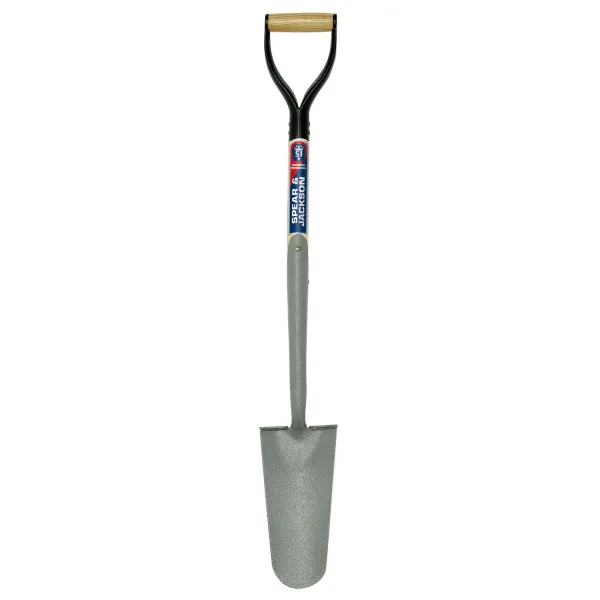
Spear & Jackson Tree Planting/Rabbiting Spade MYD: long, narrow, tapered blade on a MYD handle
A tree planting or rabbiting spade has a long, narrow, tapered blade and a solid socket. That geometry does two things a garden spade cannot: it penetrates undisturbed forest soil with far less effort, and it opens a deep narrow slot exactly the shape of a bare-root system. The tread on the shoulder lets the planter drive it with body weight rather than arm strength — which matters enormously over a day of several hundred trees. TreeMarker stocks Bulldog Premier, Spear & Jackson and Richard Carter planting and rabbiting spades from £29.95 ex VAT, in wood, ash and fibreglass handles.
Why a Pottiputki changes the economics of plug planting
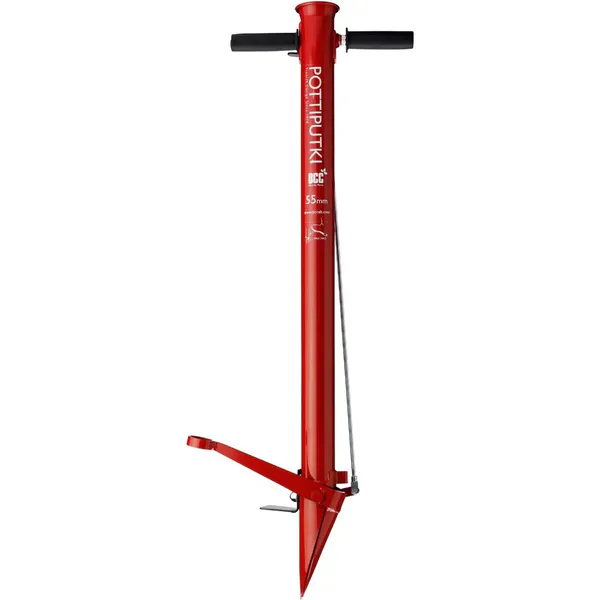
Pottiputki Planting Pipe: planting tube for cell-grown stock, sized to the plug
The Pottiputki is a Finnish planting tube and it is the reason cell-grown stock is now so widely used. The planter carries the tube upright, drops a cell in the top, pushes the tube into the ground, and squeezes a foot-operated lever that opens the jaws at the base to release the plant. The planter never bends down.
Over a full day the cumulative effect on output and on the planter's back is substantial, which is why contract planting squads use them almost universally for plug stock. TreeMarker supplies Pottiputki tubes from £152.00 ex VAT, plus matched seedling boxes and harnesses from £65.00. Note that the tube diameter must suit the cell size you are planting — check the cell dimensions from your nursery before ordering.
Do I need a planting bag?
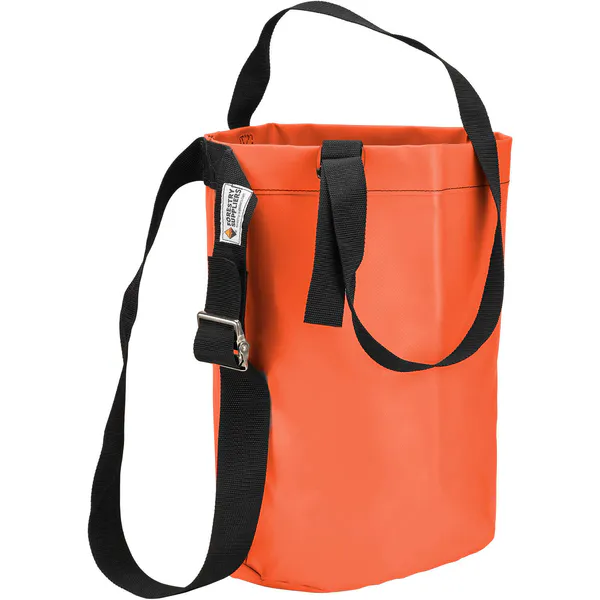
Jim-Gem Single Round Tree Planting Bag: 30 cm wide by 45 cm deep, shoulder strap included
Yes, if you are planting more than a handful of trees — and the reason is not convenience, it is survival rates.
Bare-root tree roots can be fatally damaged by a few minutes of exposure to sun and wind. The fine root hairs that actually take up water desiccate quickly, and a plant that looks perfectly healthy going into the ground can fail months later because of how it was handled on the day. A proper planting bag keeps the stock shaded, contained and out of the wind between the heel-in and the hole.
The bags, harnesses and seedling boxes are listed with prices in the range below.
Double bags balance the load across both hips, which is worth the extra outlay on any job lasting more than a few days. For cell-grown stock, a Pottiputki seedling box keeps the plugs upright and the cells intact, which a soft bag does not.
How many trees per hectare?
Stocking density follows directly from spacing: trees per hectare = 10,000 ÷ (spacing in metres)².
| Spacing | Trees per hectare | Typically used for |
|---|---|---|
| 1.5 m | approx. 4,444 | High-density conifer establishment |
| 2.0 m | 2,500 | Standard commercial conifer spacing |
| 2.5 m | 1,600 | Mixed and broadleaf woodland |
| 3.0 m | approx. 1,111 | Broadleaf, agroforestry, wider-spaced schemes |
Grant schemes and woodland creation funding usually specify minimum stocking densities and, in some cases, species mixes. Check the current scheme requirements with your forestry adviser or the relevant national forestry authority before you order stock — the density decision drives everything else, including how many trees you have to carry.
A tree planting kit checklist
- Planting tool — spade or spear for bare-root, Pottiputki for cell-grown
- Planting bag or seedling box — one per planter, sized to the stock
- Gloves — bare-root planting is hard on hands in cold, wet conditions
- Marking canes or flagging tape — to set out lines and mark the day's progress
- A measuring tape or marked cane — for spacing checks; eye-judged spacing drifts badly over a long row
- Tree guards and stakes — where deer, rabbit or hare browsing is a risk
- Water and a heel-in site — somewhere shaded and sheltered to hold the day's stock
The range and prices
The range is set out by type — spades, spears, the Pottiputki system with its seedling boxes, then bags and harnesses — with makers in the order TreeMarker stocks them.
Planting and rabbiting spades
| Product | Detail | From (ex VAT) |
|---|---|---|
| Spear & Jackson Tree Planting/Rabbiting Spade MYD | MYD handle | £29.95 |
| Bulldog Premier Tree Planting Spade, Wood MYD | Wooden shaft, MYD handle | £29.95 |
| Bulldog Premier Rabbit/Planting Spade, Wood T | Wooden shaft, T handle | £31.95 |
| Bulldog Premier Tree Planting Spade, Fibreglass MYD | Fibreglass shaft, MYD handle | £37.95 |
| Richard Carter Treaded Planting/Rabbiting Spade, Ash MYD | Ash shaft, MYD handle, treaded | £34.95 |
| Richard Carter Heavy Duty Rabbiting Spade, Ash MYD | Ash shaft, MYD handle, heavy duty | £34.95 |
Planting spears
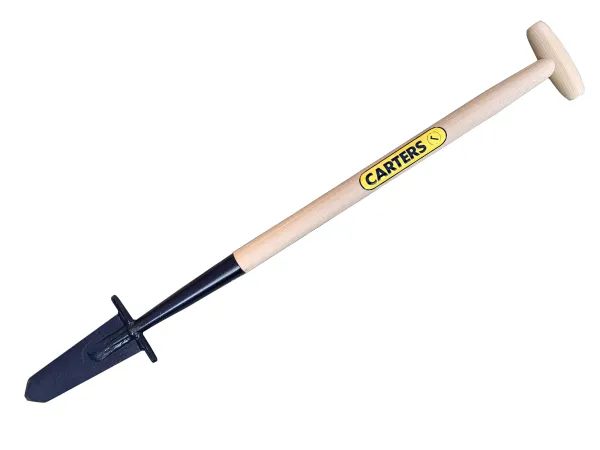
Richard Carter Tree Planting Spear (T handle): 28 in ash shaft, T handle
| Product | Detail | From (ex VAT) |
|---|---|---|
| Richard Carter Tree Planting Spear (T handle) | 28 in ash, T handle | £43.95 |
| Richard Carter Tree Planting Spear (MYD handle) | 28 in ash, MYD handle | £45.95 |
Pottiputki
| Product | Detail | From (ex VAT) |
|---|---|---|
| Pottiputki Planting Pipe | Planting tube for cell-grown stock; sized to the plug | £152.00 |
| Pottiputki Seedling Box with Belt Set | Single box carrier for cell-grown stock | £65.00 |
| Pottiputki Double Seedling Plant Box with Harness | Double capacity with harness | £115.00 |
Planting bags and harnesses
| Product | Detail | From (ex VAT) |
|---|---|---|
| Tree Planting Bag | Medium 58 × 35 × 18 cm or large 73 × 50 × 18 cm, waterproof Plasticotta | £42.50 |
| Jim-Gem Single Round Tree Planting Bag | 30 cm wide × 45 cm deep, shoulder strap included | £55.00 |
| Jim-Gem Double Round Tree Planting Bags | 30 cm wide × 38 cm deep, with shoulder harness | £85.00 |
| Jim-Gem Adjustable Shoulder Harness | Replacement harness for the double bags | £55.00 |
Prices exclude VAT and were correct on 28 September 2026. See the live category page for current pricing.
Ready to order? Browse tree planting spades and spears, planting bags and harnesses, or the full tree planting range.
Planning a woodland creation scheme and not sure what to kit a squad out with? Call 01727 575460 or email sales@treemarker.co.uk.
Tree planting tools: frequently asked questions
When is the tree planting season in the UK?
Bare-root trees are planted while dormant, roughly from November to March, avoiding periods when the ground is frozen or waterlogged. Cell-grown or plug stock has a much wider planting window because the root plug stays intact and undisturbed, though establishment is still best outside the height of summer drought.
What is notch planting?
Notch planting is the standard UK method for bare-root forestry transplants. Instead of digging a hole, the planter drives a narrow spade or spear into the ground, levers it to open a slot, inserts the roots and firms the slot closed underfoot. A T-notch uses one cut across and one down the middle; an L-notch uses two cuts at right angles and suits heavier ground.
What is a Pottiputki and how does it work?
A Pottiputki is a Finnish planting tube for cell-grown and plug stock. The planter drops a cell down the tube, pushes the tube into the ground, and operates a foot lever that opens jaws at the base to release the plant — all without bending down. It is significantly faster than spade planting for plug stock and far easier on the back over a full day.
What is the difference between a planting spade and a garden spade?
A tree planting or rabbiting spade has a long, narrow, tapered blade and a solid socket, designed to penetrate undisturbed soil and open a deep narrow slot the shape of a bare-root system. A garden spade has a wide blade built to lift and turn soil. The tread on a planting spade lets the planter drive it with body weight rather than arm strength.
Do I need a planting bag?
For anything beyond a handful of trees, yes. Bare-root roots can be fatally damaged by a few minutes of exposure to sun and wind — the fine root hairs desiccate quickly and the tree may fail months later. A planting bag keeps stock shaded, contained and sheltered between the heel-in and the hole, and directly affects survival rates.
How many trees can you plant per hectare?
Trees per hectare equals 10,000 divided by the spacing in metres squared. Common UK figures are 2.0 m spacing for about 2,500 trees per hectare, 2.5 m for 1,600, and 3.0 m for about 1,111. Grant schemes typically specify a minimum stocking density, so check current scheme requirements before ordering stock.
What is a rabbiting spade used for in forestry?
A rabbiting spade has a long narrow blade originally intended for digging out burrows, and that same geometry makes it an excellent tree planting tool. It opens deep narrow notches with minimal ground disturbance and is also used for post holes and narrow trenching, which is why planting and rabbiting spades are often sold as the same tool.
Should I use a planting spade or a planting spear?
A planting spade is the more versatile tool: it opens notches, handles heavier ground and can dig if needed. A planting spear drives faster with less effort on lighter soils and suits high-volume notch planting and bulb work, but it cannot lift or dig. Squads planting large volumes on suitable ground often prefer spears; a mixed job favours the spade.
What size Pottiputki do I need?
Pottiputki tubes are made in different diameters to match different cell sizes, so the correct choice depends on the plug dimensions supplied by your nursery. Check the cell size before ordering — a tube too narrow will not take the plug, and one too wide releases the plant untidily into an oversized hole.
How do you stop newly planted trees from failing?
The three most common causes of failure are root desiccation during handling, competition from grass and weeds in the first summer, and browsing damage. Keep stock bagged and shaded, screef back vegetation around each planting position, firm the soil properly around the roots, and protect against deer and rabbits where present.
Where can I buy tree planting tools in the UK?
TreeMarker supplies planting spades, planting spears, Pottiputki planting tubes, planting bags and harnesses across the UK and Ireland, from brands including Bulldog, Spear & Jackson, Richard Carter, Jim-Gem and Pottiputki. Free delivery on orders over £80 + VAT, with same-day dispatch on stocked items.
Sources and further reading
- When a felling licence is needed — GOV.UK / Forestry Commission
- Royal Forestry Society — woodland management guidance
- Woodland Trust — tree planting and establishment advice
About TreeMarker. TreeMarker is the trading name of Pentaprise Ltd, a UK supplier of forestry and arboriculture equipment established in 2019 and based in Hertfordshire. TreeMarker supplies forestry contractors, woodland owners, estates, local authorities, ecological consultancies and colleges across the UK and Ireland.
Rated 4.9 out of 5 from over 500 reviews on Trustpilot · same-day dispatch on stocked items · free UK delivery on orders over £80 + VAT · purchase orders and proforma invoices accepted · 01727 575460 · sales@treemarker.co.uk