
Tree Tags: A Complete Buyer's Guide
- 14 September 2026
- Peter Greenley
Guides › Tree Tags · Last updated 14 September 2026 · TreeMarker
Tree tags are numbered markers fixed to a standing tree so it can be identified again on a later visit. They are used for tree surveys, condition inspections, timber inventories, research plots and TPO records. Most UK forestry and arboricultural work uses 25 mm embossed aluminium tags fixed with a non-ferrous aluminium clout nail. TreeMarker stocks aluminium, pre-wired, extra-thick and laser-engraved tags from £8.95 ex VAT.
Tree tags at a glance
| Most common size | 25 mm diameter round, embossed aluminium |
|---|---|
| Standard fixing | 2.65 × 30 mm aluminium clout nail — one per tag |
| Why aluminium nails | Non-ferrous, so they will not damage a saw chain or a mill blade if the tree is later felled and processed |
| Numbering | Sequential, supplied in ranges from 1–50 up to 9001–9999; blank tags also available |
| Pack sizes | 50, 100, 200, 500 and 1000 |
| Typical service life | Aluminium: decades outdoors. Laser-engraved systems: designed for the full rotation of a crop |
| Alternative fixings | Wire loop or cable tie, where nailing is unsuitable |
| Pre-wired option | Tags supplied ready-wired — saves threading wire on site and stops loose tags spilling from the bag |
| Price from | £8.95 ex VAT (blank aluminium, pack of 50) |
What are tree tags used for?
Tree tags give each tree a permanent, unique identity so that a record held elsewhere — a spreadsheet, a GIS layer, a survey app or a paper tally — can be reliably matched back to the right stem months or years later. Without a tag, re-finding an individual tree in a stand of similar trees is slow, error-prone and frequently impossible.
The main uses in the UK are:
- Tree condition surveys and safety inspections. Local authorities, estates and highways teams tag individual trees so that inspection cycles, recommended works and re-inspection dates attach to a specific stem.
- Timber inventory and marking for felling. Trees selected for thinning or felling are tagged so the marking decision survives between the marking visit and the harvesting operation.
- Permanent sample plots and research. Growth monitoring requires the same trees measured repeatedly over decades.
- TPO and planning records. Trees covered by a Tree Preservation Order, or recorded in a BS 5837 survey for a development site, are tagged so the survey schedule and the tree constraints plan can be cross-referenced on site.
- Ancient, veteran and notable tree registers. Long-term identification with minimal intervention.
- Nursery and arboretum stock. Tracking provenance, species and planting date.
Which tree tag material should I use?
Aluminium is the default choice for UK forestry and arboriculture, and for most jobs it is the right answer. The alternatives matter when the tag has to survive harvesting, or be read at distance, or be attached without a nail.
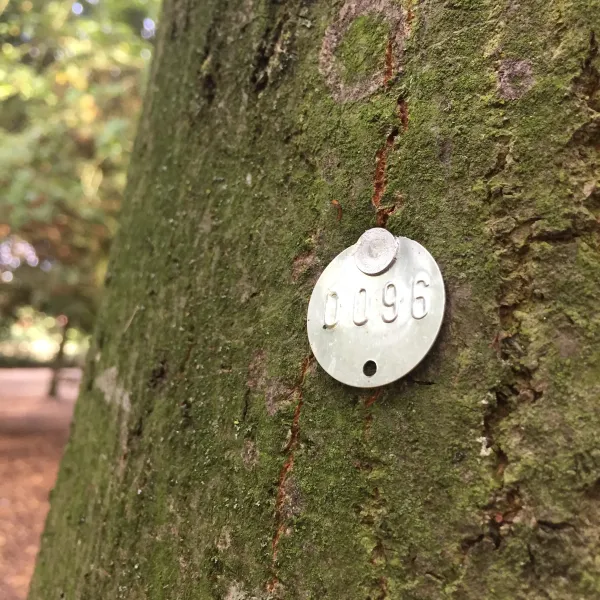
Aluminium Tree Tags: 25 mm embossed, sequentially numbered, supplied with or without nails
| Type | Best for | Notes |
|---|---|---|
| Embossed aluminium, 25 mm | General surveys, inventory, plot work | The workhorse. Corrosion-resistant, soft enough that the embossed numeral stays legible, cheap enough to use in quantity |
| Extra-thick aluminium (1.2 mm) | Long-term plots, exposed sites, stock likely to be knocked | Noticeably more rigid; resists bending and burial by callus growth for longer |
| Pre-wired aluminium | Any job where speed in the field matters | Supplied strung on a wire, so there is no threading on site and no loose tags to drop; fixed with a nail like any other tag |
| Oval wired tags | Where the number must be read at distance | Larger format allows bolder numerals |
| Laser-engraved (Latschbacher ArboTag) | Commercial harvesting and timber chain-of-custody | High-contrast black-on-white or white-on-black, designed to be applied fast with a dedicated magazine and hammer |
| Blank aluminium | Your own numbering, letters or codes | Mark with a steel stamp set or an engraving pen |
Cheap plastic tags are sometimes offered elsewhere. UV degradation makes ordinary plastic brittle within a few seasons, so they are a poor choice for anything you expect to re-find in five years' time. The Latschbacher ArboTag is also a plastic tag, but the opposite case: an engineered, laser-engraved tag designed to last the full rotation of a crop, bought for the speed of its magazine-and-hammer system rather than for price.
How do you fix a tree tag without damaging the tree?
A correctly fitted tag causes negligible harm. A badly fitted one can girdle a stem, get swallowed by callus growth, or wreck a saw chain at harvest. The rules are simple and worth getting right first time.
1. Use non-ferrous nails wherever the tree may be harvested
Aluminium clout nails are the standard option with TreeMarker's tags because they cut harmlessly: a steel nail left in a stem will destroy a chainsaw chain and can damage a sawmill blade, which is both a safety issue and an expensive one — and it makes the log unsaleable. That is the benefit to weigh, rather than a blanket ban. The Latschbacher ArboTag system is the designed exception: its steel nails are magnetic so that the hammer can pick them up, which is what makes one-motion tagging possible, and ArboTag users tell the harvesting contractor where the tags are (see rule 5). One practical note: the standard 2.65 mm clout nail is wider than the 2 mm hole in a 25 mm embossed tag and does not pass through it cleanly, so some customers source a finer nail. If you do, keep it non-ferrous for any tree that may one day be felled and processed.
2. Leave the nail proud
Do not drive the nail flush. Leave roughly 10–15 mm of shank standing out so the tree can add girth for years before the tag is pressed tight against the bark. A tag hammered home flat will be engulfed by callus tissue within a few growing seasons on a vigorous stem.
3. Pick a consistent height and aspect
Agree a convention before you start and apply it to every tree in the survey — for example, tag on the north face at 1.5 m. Consistency is what makes the tags findable at speed on the next visit. Placing tags above 1.3 m also keeps them clear of the point where diameter at breast height is measured, so the tag does not interfere with the DBH reading.
4. Never use a closed loop of wire around a stem
If you are using wire, leave generous slack and re-check it periodically. Wire pulled tight around a trunk or branch will girdle it as the tree grows, killing everything above the constriction. Size the loop for growth, not for neatness.
5. Think about the harvesting operation
If the tree will be felled and processed, keep tags low and on one agreed face, and tell the harvesting contractor where they are. Tags fixed at random heights are a hazard to the operator.
Nails, wire or cable ties?
Nailing is the standard method and the one most TreeMarker customers use: a single aluminium clout nail through the tag's hole, left proud, is quick, secure and harmless to the tree. The two alternatives exist for trees that must not be nailed. A wire loop is a length of soft wire threaded through the tag's hole, passed around a small branch or the stem and twisted closed with generous slack, so the tree grows into the loop rather than against it; it is checked and loosened at each visit. A cable tie does the same job in seconds on a sapling or a small stem, but natural nylon degrades in sunlight and the tie has to be cut off and replaced as the stem thickens, so treat it as a temporary fixing.
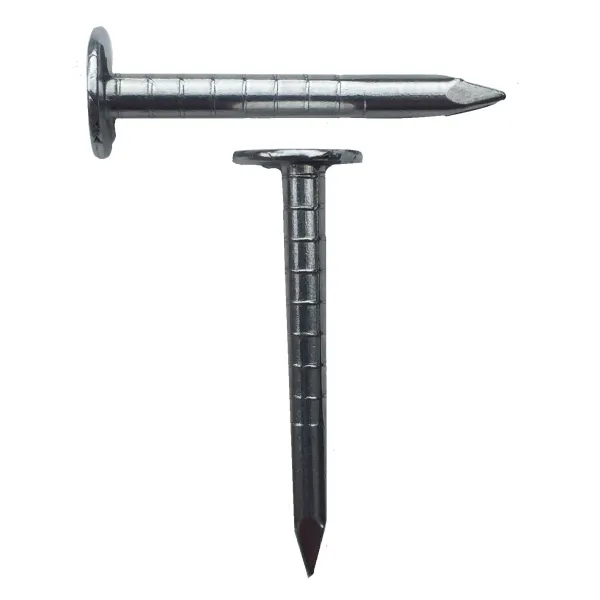
Aluminium Clout Nails: non-ferrous, so safe if the timber is later processed
| Fixing | Use when | Watch out for |
|---|---|---|
| Aluminium clout nail | Standard forestry and inventory work on healthy timber | Non-ferrous, so safe if the timber is later processed. Leave proud for growth |
| Wire loop | Veteran, TPO or thin-barked trees; where the landowner forbids nailing | Girdling if the loop is not slack and re-checked |
| Cable tie | Nursery stock, short-term marking, small stems and saplings | UV degradation; must be released or replaced as the stem thickens |
How many tags do I need, and which numbering?
Tags are supplied in sequential ranges, so order to cover your survey population with headroom. TreeMarker supplies ranges from 1–50 through to 9001–9999, in packs of 50, 100, 200, 500 and 1000.
Two practical points:
- Never duplicate a number within one site. If you run several surveys on one estate, allocate a distinct block of numbers to each compartment or site rather than restarting at 1. It removes an entire category of data error.
- Order more than you count. Tags get dropped, mis-nailed and lost. Ten per cent spare on a survey of any size is realistic, and part-packs do not go off.
What is the Latschbacher ArboTag system?
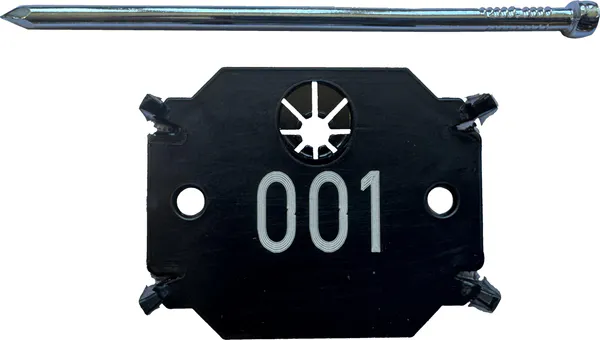
Latschbacher ArboTag: laser-engraved plastic tags fixed with the ArboTag hammer and magazine
ArboTag is a professional tagging system built for speed on commercial harvesting sites rather than for occasional survey work. Tags are laser-engraved for high contrast and supplied in stacks of 40 that load into a magazine worn on a neck strap. A long-handled hammer with a magnetic nail holder picks up a nail and drives the tag in one motion, so the operator tags at chest height without bending or handling loose nails.
It is a significant investment — the hammer alone is £316.00 ex VAT and the magazine and storage case from £265.00 — so it earns its keep where volume is high and tagging is a daily task. For an arboricultural consultancy tagging a few hundred trees a year, conventional aluminium tags and a claw hammer remain the sensible choice.
Tree tag range and prices
The range is set out by type: TreeMarker’s own aluminium tags first, then the Latschbacher ArboTag system with the nails, magazine and hammer that belong to it, then the nails, ties and tools used with aluminium tags.
Aluminium tree tags
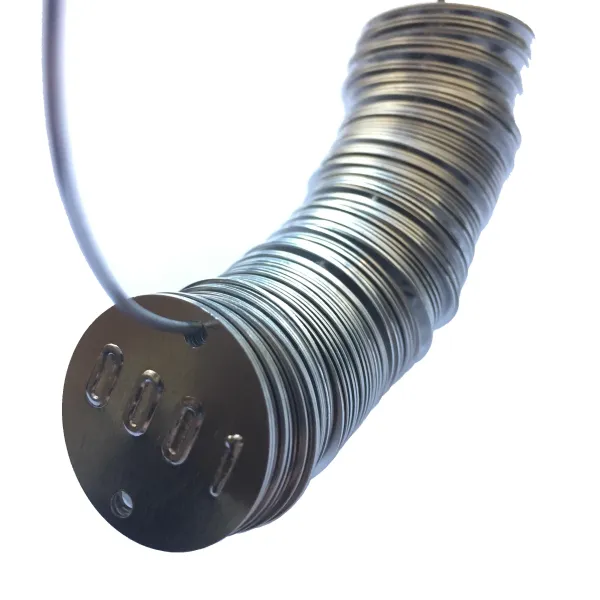
Aluminium Tree Tags (Pre-Wired): supplied strung on a wire loop, ready for the field
| Product | Detail | From (ex VAT) |
|---|---|---|
| Aluminium Tree Tags | 25 mm, embossed sequential numbering, packs of 50–1000, with or without nails | £15.95 |
| Aluminium Tree Tags (Pre-Wired) | Supplied on a wire loop, numbering to 9,999 | £19.95 |
| Round Extra-Thick Aluminium Tree Tags | 1.2 mm thick, sequentially numbered, supplied on wire | £13.50 |
| Oval Aluminium Tree Tags (Wired) | Bold sequential numbering, supplied on wire | £35.95 |
| Blank Aluminium Tree Tags | Unnumbered, packs of 50 and 100, with or without nails | £8.95 |
Latschbacher ArboTag system
| Product | Detail | From (ex VAT) |
|---|---|---|
| Latschbacher ArboTag (Black or White) | Laser-engraved, stacks of 40, nails included | £165.00 |
| ArboTag Steel Nails LA26 | 80 × 3 mm magnetic, pack of 100 (for the ArboTag hammer system) | £29.95 |
| ArboTag Magazine & Storage Case | Holds 40 tags, stores 200, nail pouch and neck strap | £265.00 |
| Latschbacher ArboTag Hammer | Long-handled, magnetic nail holder, clips to magazine | £316.00 |
Nails, cable ties and tools
| Product | Detail | From (ex VAT) |
|---|---|---|
| Aluminium Clout Nails | 2.65 × 30 mm non-ferrous, various pack sizes | £2.25 |
| Cable Ties Natural 200 mm | 2.5 mm wide, pack of 100 | £2.95 |
| Tubular Steel Claw Hammer | 8 oz, polished head, rubber grip | £6.95 |
Prices exclude VAT and were correct on 14 September 2026. See the live category page for current pricing and pack options.
Ready to order? Browse the full tree tags range, or see the wider tree marking category for flagging tape, tree marking paint and tree crayons.
Not sure which tag suits your survey? Call 01727 575460 or email sales@treemarker.co.uk.
Tree tags: frequently asked questions
What size are standard tree tags?
The standard round aluminium tree tag used in UK forestry and arboriculture is 25 mm in diameter, with an embossed sequential number and a pre-punched hole for a nail. Larger oval tags are available where the number needs to be read from a distance, and extra-thick 1.2 mm tags are used where the tag must resist bending on exposed or long-term plots.
What nails should I use for tree tags?
Use aluminium clout nails, typically 2.65 × 30 mm, at one nail per tag. Aluminium is non-ferrous, so if the tree is later felled and processed the nail will not damage a chainsaw chain or a sawmill blade, whereas a steel nail is a genuine safety hazard and will devalue the log. The one designed exception is the Latschbacher ArboTag system, whose magnetic steel nails are what let the hammer pick up and drive a tag in one motion — on ArboTag sites, tell the harvesting contractor where the tags are.
Do tree tags damage the tree?
A correctly fitted tag causes negligible damage. A single small-gauge aluminium nail leaves a wound the tree readily compartmentalises. The real risks are girdling from wire looped too tightly around a stem, and the tag being engulfed by callus growth because the nail was driven flush. Leave 10–15 mm of nail proud and keep any wire loop slack.
How high should tree tags be fixed?
Pick a height and stick to it across the whole survey — 1.5 m is common. Fixing above 1.3 m keeps the tag clear of the point where diameter at breast height is measured, so it does not obstruct the DBH reading. Agreeing a consistent aspect as well, such as always facing north or always facing the access track, makes re-finding tags far quicker.
How long do aluminium tree tags last?
Aluminium tags remain legible outdoors for decades. Aluminium forms a stable oxide layer that resists further corrosion, and an embossed numeral cannot fade the way a printed one does. In practice the limiting factor is not the tag but the tree: on a fast-growing stem the tag will eventually be pressed into the bark unless the nail was left proud.
Can I get tree tags without numbers?
Yes. TreeMarker supplies blank aluminium tree tags in packs of 50 and 100, with or without nails, from £8.95 ex VAT. Blanks are used where you need your own coding — compartment prefixes, species letters or an existing asset reference — and can be marked with a steel stamp set or an engraving pen.
What is the difference between wired and nailed tree tags?
Nailed tags are fixed with a single aluminium clout nail through a punched hole and are the standard for general forestry and inventory work. Wired tags hang on a wire loop instead, penetrating nothing — the usual choice for veteran trees, trees covered by a Tree Preservation Order, thin-barked species, or work on land where the owner forbids nailing. Buying tags pre-wired is a different thing altogether: they come strung on a wire for carrying, so nothing spills from the bag and there is no threading on site, and they are then nailed like any other tag; that convenience is why the pre-wired option is so popular.
How many tree tags come in a pack?
TreeMarker supplies numbered aluminium tree tags in packs of 50, 100, 200, 500 and 1000, in sequential ranges from 1–50 up to 9001–9999. Latschbacher ArboTag laser-engraved tags are supplied in stacks of 40 to suit the ArboTag magazine. Order around ten per cent above your counted survey population to allow for losses in the field.
Are tree tags used for TPO trees?
Yes, commonly. Trees covered by a Tree Preservation Order, and trees recorded in a BS 5837 survey for a development site, are frequently tagged so the survey schedule cross-references reliably to the tree constraints plan. Because these trees are protected and generally retained, wired tags are often preferred over nailed tags to avoid any bark penetration.
Where can I buy tree tags in the UK?
TreeMarker supplies aluminium, pre-wired, extra-thick and Latschbacher ArboTag tree tags across the UK and Ireland, with free delivery on orders over £80 + VAT and same-day dispatch on stocked items. TreeMarker is rated 4.9 out of 5 from over 500 Trustpilot reviews and accepts purchase orders from councils, colleges and established businesses.
Sources and further reading
- When a felling licence is needed — GOV.UK / Forestry Commission
- How do foresters measure trees? — Royal Forestry Society
- FISA Safety Guides — Forest Industry Safety Accord
About TreeMarker. TreeMarker is the trading name of Pentaprise Ltd, a UK supplier of forestry and arboriculture equipment established in 2019 and based in Hertfordshire. TreeMarker supplies forestry contractors, woodland owners, estates, local authorities, ecological consultancies and colleges across the UK and Ireland.
Rated 4.9 out of 5 from over 500 reviews on Trustpilot · same-day dispatch on stocked items · free UK delivery on orders over £80 + VAT · purchase orders and proforma invoices accepted · 01727 575460 · sales@treemarker.co.uk